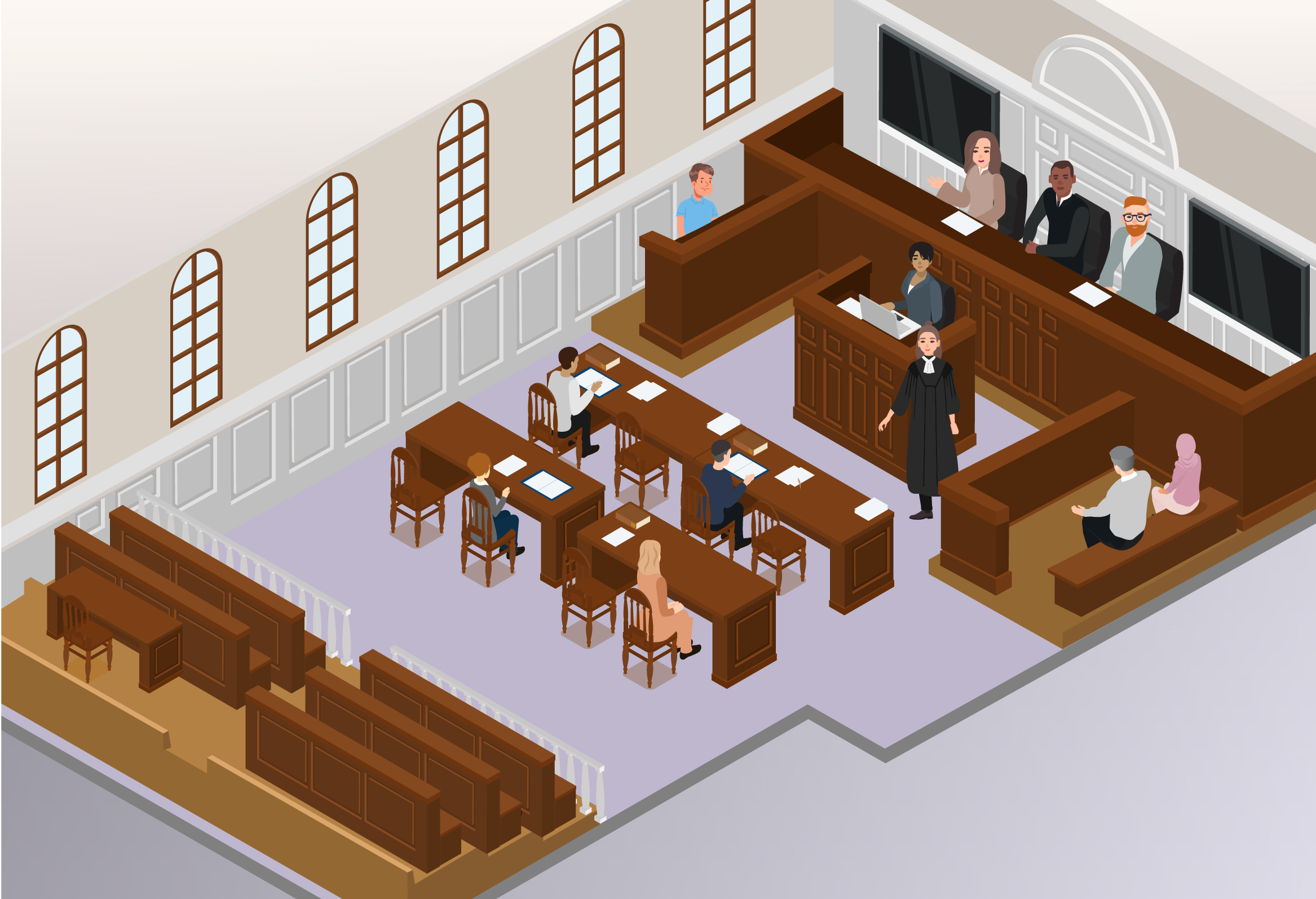
Magistrates or district judge
Cases in magistrates’ courts are heard by two or three magistrates, or one district judge. They’re sometimes known as a justice of the peace (JP).
Magistrates are trained, unpaid volunteers. As they’re not legally qualified, they work with legal advisers who provide advice on law and legal practice and procedures. A district judge is a paid lawyer.
Magistrates do not wear wigs and gowns.
Use the play button below to read aloud.
Legal adviser or court clerk
A legal adviser helps the magistrates by providing advice on law and legal procedures. They make sure everything remains legally correct and in line with the rules of the court.
Use the play button below to read aloud.
Witness
A witness is someone who has seen, heard or knows something important about an event being considered in court. They can be called to give evidence either by the prosecution or the defence.
They’ll give their evidence and answer questions from the witness stand, by live video link or in other ways such as pre-recorded video evidence. Witnesses are not expected to know everything or remember every detail, just to honestly share what they know in their own words.
Use the play button below to read aloud.
Defendant
A defendant is the person who has been accused of the crime the trial is about. They usually sit in the dock.
A uniformed prison custody officer, or court security officer, may be next to the defendant in the dock.
Use the play button below to read aloud.
Prosecution lawyer
The Crown Prosecution Service (CPS) usually leads the prosecution, and their job is to present the evidence that shows what they believe happened. They aim to prove the defendant is guilty.
The CPS prosecutes most cases in the criminal courts. In magistrates’ courts, the CPS may prosecute the case through a Crown Prosecutor or Associate Prosecutor, or instruct a local barrister to prosecute on its behalf.
Use the play button below to read aloud.
Defence lawyer
The defence lawyer represents the defendant in court and advises them on legal matters. They respond to the prosecution’s case to make sure the defendant gets a fair trial.
Use the play button below to read aloud.
TV screens
Witnesses’ video-recorded evidence, and video-recorded cross-examination, is played to the court on the TV screens in the courtroom. If a witness is giving evidence by live link, the TV screens display this live video feed to everyone in the courtroom.
Use the play button below to read aloud.
Usher
The court usher supports people who are attending court, such as witnesses and jurors. They prepare the court and make sure everyone is ready and in the right place at the right time. They usually take the oaths of witnesses during the process of swearing in. The usher usually wears a black gown.
Use the play button below to read aloud.